ruletka online — przewodnik po stołach i wariantach gry 2026
ruletka online wymaga od gracza nie tylko refleksu, ale również umiejętności zarządzania emocjami. Często to właśnie psychika decyduje o ostatecznym wyniku sesji. Dlatego warto poznać techniki, w których ruletka online automaty odgrywa istotną rolę w utrzymaniu zimnej krwi.
Zobacz też:
- Dlaczego ruletka online na żywo może być Twoim atutem?
- ruletka online automaty – co musisz wiedzieć przed grą
- Najlepsze metody gry w ruletkę: ruletka online automaty w praktyce
- Jak wykorzystać ruletka online na żywo w swojej strategii
- Bonusy kasynowe przy ruletce – co warto wiedzieć
- Stół do ruletki – wizualizacja zakładów
- Jakie są typowe problemy z ruletka online ranking?
- Jak grać w ruletkę bez ryzyka uzależnienia
Dlaczego ruletka online na żywo może być Twoim atutem?
La Partage is a distinctive rule in the game of roulette that significantly alters the house edge and player experience, primarily found in European and French roulette variants. Unlike the American version, which features both a single zero and a double zero, the European wheel contains only a single zero, and the French layout incorporates the La Partage rule, which applies specifically to even-money bets such as red/black, odd/even, and high/low (1-18 or 19-36). When a player places an even-money bet and the ball lands on zero, the La Partage rule dictates that the player loses only half of their wager, with the other half returned to them. This rule effectively reduces the house edge on even-money bets from the standard 2.70% (which is the house edge for other bets in European roulette) down to 1.35%. To understand the mathematical impact, consider a player who makes 100 even-money bets of $10 each. Under normal European rules, the expected loss would be $27 (since the house edge is 2.70%). However, with La Partage, the expected loss drops to $13.50. This is because, on average, the ball lands on zero about once in every 37 spins (since there are 37 numbers: 0-36). When it does, the player loses only $5 instead of $10, saving $5 on that spin. Over 100 spins, the expected number of zero outcomes is approximately 2.7 (since 100/37 ≈ 2.7), and each such outcome saves $5, totaling about $13.50 in savings. This reduction in house edge is significant for players who prefer low-risk strategies, as it increases the probability of a session ending with a profit or smaller loss. The rule is often confused with the ‘En Prison’ rule, which is another French roulette rule. Under En Prison, when a zero is spun, the even-money bet is not lost but ‘imprisoned’ for the next spin. If the next spin results in a winning outcome for the player, the bet is returned without any winnings; if the next spin loses, the bet is forfeited. En Prison can also reduce the house edge to 1.35%, but it requires the player to wait for the outcome of an additional spin, whereas La Partage provides an immediate half refund. Casinos that offer La Partage often advertise it as a player-friendly feature, and it is a key differentiator for French roulette tables, which are typically found in European casinos and high-end establishments. In contrast, American roulette, with its double zero, has a house edge of 5.26% on all bets, and even-money bets do not benefit from any such rule, making it less favorable for players. The origin of La Partage dates back to 19th-century France, and it was introduced to attract players by lowering the casino’s advantage. Today, it is a standard rule in many online casinos, especially those offering European or French roulette, and it is often highlighted in game descriptions. For a player, understanding La Partage is crucial for bankroll management. For instance, if a player has a bankroll of $200 and bets $10 on red each spin, without La Partage, they might expect to lose about $5.40 over 20 spins (since 20 * $10 * 0.027 = $5.40), but with La Partage, the expected loss is only $2.70. This difference might seem small, but over time, it compounds. Moreover, the psychological impact is notable: losing only half a bet on zero feels less punishing, which can encourage players to continue playing, but it also means that the casino still retains a slight edge.
lotto zdrapka — ekspresowe losowania | lotto zdrapka
ruletka online automaty – co musisz wiedzieć przed grą
Jak zacząć przygodę z ruletką
Ruletka to jedna z najbardziej rozpoznawalnych gier kasynowych, która od wieków przyciąga graczy swoją prostotą i elegancją. Zanim jednak usiądziesz przy stole, warto zrozumieć podstawowe zasady, które rządzą tą grą. Na samym początku gracze mają do wyboru kilka odmian ruletki – europejską, amerykańską, francuską oraz na żywo. Każda z nich różni się nieco zasadami, ale najważniejszy jest podział na pola z liczbami od 0 do 36 (w wersji amerykańskiej dodatkowo pojawia się 00). Twoim celem jest przewidzenie, na którym polu zatrzyma się kulka, i postawienie na to odpowiednich żetonów. Zakłady można stawiać na pojedyncze liczby, grupy liczb, kolory, parzystość czy przedziały – im bardziej precyzyjny zakład, tym wyższa potencjalna wygrana. Dla początkujących kluczowe jest zrozumienie różnic między poszczególnymi wariantami, ponieważ mają one bezpośredni wpływ na przewagę kasyna i szanse gracza.
Europejska i francuska – warianty z najniższą przewagą kasyna
Najczęściej spotykaną odmianą w kasynach online i stacjonarnych jest ruletka europejska, która posiada jedno zero. Dzięki temu przewaga kasyna wynosi zaledwie 2,7%, co czyni ją jedną z najbardziej korzystnych dla graczy. Francuska ruletka jest w zasadzie bardzo podobna, ale oferuje dodatkowe zasady, takie jak La Partage i En Prison, które w przypadku trafienia na zero zwracają połowę postawionej kwoty lub pozwalają na ponowne postawienie tego samego zakładu w kolejnym okrążeniu. Dzięki tym regułom przewaga kasyna spada jeszcze niżej – do około 1,35% w przypadku zakładów na równe szanse. Dla graczy, którzy chcą maksymalizować swoje szanse, wybór pomiędzy tymi dwoma wariantami jest strategiczną decyzją. Warto zwrócić uwagę na to, że w ruletce francuskiej stoły często są obsługiwane w języku francuskim, a niektóre zakłady mają odmienne nazwy, co może być mylące dla początkujących, ale jednocześnie dodaje grze wyjątkowego charakteru.
Amerykańska ruletka – dlaczego warto jej unikać?
Ruletka amerykańska różni się od europejskiej obecnością dodatkowego pola z podwójnym zerem (00). Ta pozornie niewielka zmiana ma ogromny wpływ na matematykę gry, ponieważ przewaga kasyna wzrasta do 5,26%. Oznacza to, że z każdym postawionym żetonem gracz statystycznie traci więcej niż w wersji europejskiej czy francuskiej.
Najlepsze metody gry w ruletkę: ruletka online automaty w praktyce
Jak wykorzystać ruletka online na żywo w swojej strategii
variants, in the context of genetics and evolutionary biology, refer to the different forms of a gene, known as alleles, or the distinct versions of a DNA sequence that arise through mutations. These mutations can be as small as a single nucleotide polymorphism (SNP), where one base pair is altered, or as large as structural variations such as deletions, duplications, inversions, or translocations of chromosomal segments. Each variant carries a unique genetic code that may influence an organism’s phenotype, ranging from subtle differences like eye color to profound effects such as susceptibility to diseases. The study of variants is fundamental to understanding genetic diversity within populations, tracing evolutionary relationships, and identifying the genetic basis of inherited disorders. In human genomics, variants are cataloged in databases like dbSNP and the 1000 Genomes Project, which provide comprehensive maps of common and rare variations across global populations. These resources enable researchers to perform genome-wide association studies (GWAS) to link specific variants with traits or diseases, thereby uncovering the genetic architecture of complex conditions like diabetes, cancer, and heart disease. Moreover, variants are not static; they arise spontaneously during DNA replication or are induced by environmental factors such as radiation, chemicals, or viruses. The frequency of a variant in a population is shaped by natural selection, genetic drift, gene flow, and mutation rates, which together drive evolutionary change. For instance, the sickle cell mutation in the HBB gene confers resistance to malaria in heterozygous individuals, illustrating how a deleterious variant can be maintained in a population due to heterozygote advantage. In clinical practice, identifying pathogenic variants is crucial for diagnostic testing, carrier screening, and personalized medicine, where treatments can be tailored based on an individual’s genetic profile. Pharmacogenomics, for example, uses variants in genes like CYP2C19 and VKORC1 to predict drug metabolism and dosing, thereby reducing adverse reactions and improving therapeutic efficacy. Furthermore, variants in non-coding regions, once considered ‘junk DNA’, are now recognized to play regulatory roles, affecting gene expression through enhancers, promoters, and long non-coding RNAs. Epigenetic modifications can also influence the phenotypic impact of variants, adding another layer of complexity to genotype-phenotype correlations. With the advent of CRISPR-Cas9 and other gene-editing technologies, researchers can precisely introduce or correct variants to study their functions or to develop gene therapies for monogenic disorders like cystic fibrosis and muscular dystrophy. However, the interpretation of variants remains challenging, as many are of uncertain significance, requiring functional assays, computational predictions, and large-scale population data to classify them as benign, likely benign, pathogenic, or likely pathogenic. The American College of Medical Genetics and Genomics (ACMG) has established guidelines for variant classification, which incorporate evidence from segregation studies, allele frequency, in silico tools, and experimental data. Additionally, the concept of ‘variant burden’ in a genome, which includes the total number of rare and common variants, can influence an individual’s overall fitness and predisposition to complex diseases. In evolutionary studies, variants serve as molecular clocks, allowing scientists to estimate divergence times between species and to reconstruct phylogenetic trees. Mitochondrial DNA variants, for instance, are maternally inherited and have been used to trace human migration patterns out of Africa. Y-chromosome variants similarly track paternal lineages. The coalescent theory provides a mathematical framework to model how variants in a population share ancestry, enabling inferences about population history, effective population size, and demographic events like bottlenecks and expansions. Moreover, variants in pathogens, such as the spike protein mutations in SARS-CoV-2, can alter transmissibility, virulence, and vaccine efficacy, underscoring the dynamic nature of viral evolution and the need for continuous genomic surveillance.
ruletka online jest cenione za przyjazną atmosferę i profesjonalną obsługę.
Bonusy kasynowe przy ruletce – co warto wiedzieć
- zł200 bonus powitalny
- 100 spinów
- Wymóg 25x obrotu w 21 dni
- Wagering 40x
- Obrót 50x w ciągu 7 dni
Stół do ruletki – wizualizacja zakładów
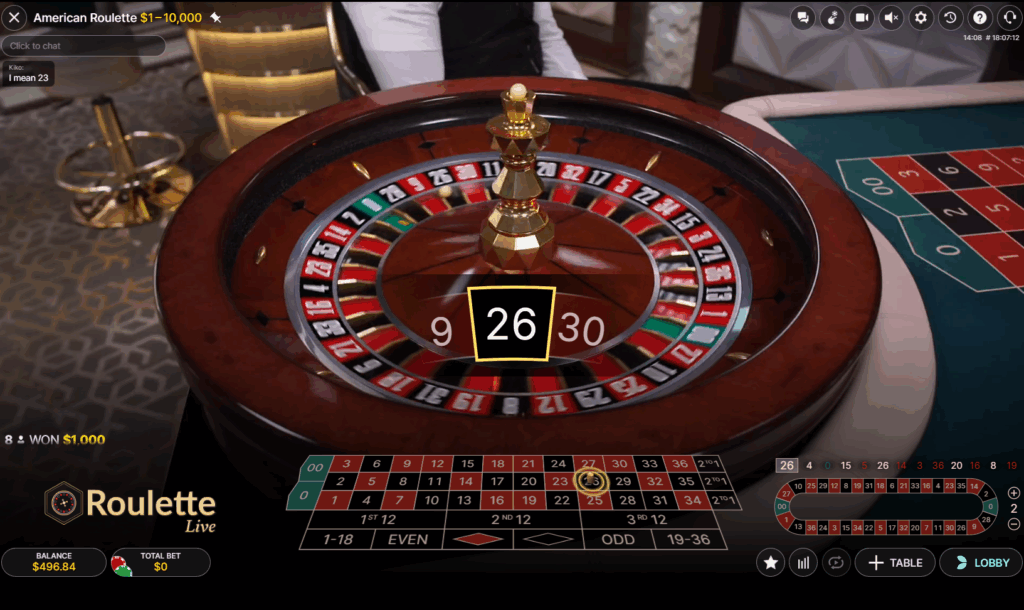
Jakie są typowe problemy z ruletka online ranking?
Czym różni się ruletka europejska od amerykańskiej?
Główna różnica polega na tym, że ruletka europejska ma jedno zero (0), a amerykańska dodatkowo podwójne zero (00). To zwiększa przewagę kasyna w wersji amerykańskiej do 5,26%, podczas gdy w europejskiej wynosi ona 2,70%.
book of dead — przegląd dostawców oprogramowania | book of dead
Na czym polega zasada La Partage w ruletce francuskiej?
W ruletce francuskiej obowiązuje zasada La Partage, która przy trafieniu zera zwraca połowę zakładów na równorzędne szanse (np. czerwone/czarne, parzyste/nieparzyste). Dzięki temu przewaga kasyna spada do 1,35%.
darmowe spiny coinmaster — najlepsze bonusy | darmowe spiny coinmaster
Jakie są najlepsze zakłady dla początkujących w ruletce?
Dla początkujących polecane są zakłady proste (outside bets), takie jak kolor, parzystość czy przedziały 1-18/19-36. Mają one niższą wypłatę (1:1), ale znacznie większe prawdopodobieństwo wygranej, co pozwala dłużej cieszyć się grą.
Czy strategie takie jak Martingale gwarantują wygraną?
Nie, żadna strategia nie gwarantuje wygranej w ruletce, ponieważ jest to gra losowa. Martingale polega na podwajaniu stawki po przegranej, ale może szybko doprowadzić do wyczerpania budżetu, zwłaszcza przy limitach stołu.
Czym różni się ruletka na żywo od standardowej wersji online?
Ruletka na żywo (live roulette) jest transmitowana z prawdziwego stołu i obsługiwana przez krupiera, co daje bardziej autentyczne doświadczenie. Wersja standardowa online to natomiast generator liczb losowych (RNG), który działa automatycznie, ale oferuje szybsze tempo gry.
Jak grać w ruletkę bez ryzyka uzależnienia
Hazard to rozrywka wyłącznie dla osób pełnoletnich (18+). Pamiętaj, aby grać odpowiedzialnie i traktować grę jako formę rozrywki, a nie sposób na zarabianie pieniędzy. Zawsze ustalaj limity czasu i pieniędzy przed rozpoczęciem gry i nigdy nie próbuj odgrywać przegranych. Jeśli czujesz, że tracisz kontrolę, skorzystaj z narzędzi samowykluczenia dostępnych u operatorów lub zwróć się o pomoc do Ogólnopolskiego Telefonu Zaufania ds. Uzależnień pod numerem 801 199 990. W Polsce działalność hazardową reguluje Ministerstwo Finansów, a gracze mogą również korzystać z rejestru samowykluczeń prowadzonego przez operatorów. Graj świadomie i odpowiedzialnie.